Acquiring laptops, desktops and other workplace technology is only the beginning. The greater challenge is managing those IT devices throughout their lifecycle while maintaining security, performance, business continuity, and cost control. For enterprises and government organisations managing large or distributed technology environments, these responsibilities can involve multiple vendors, internal teams, and procurement processes.
Device-as-a-Service (DaaS) provides a different approach by bringing technology and the services required to manage it into a structured subscription model. Instead of focusing only on acquiring IT hardware, organisations can manage technology as an ongoing service that supports employees from deployment through to IT device recovery.
What Is Device-as-a-Service?
Device-as-a-Service is a subscription-based technology model that allows organisations to access workplace IT devices together with supporting IT services without relying solely on traditional upfront purchasing. The concept goes beyond supplying laptops or desktops. Depending on the solution, DaaS can cover areas such as technology financing, hardware and software supply, security, device lifecycle management, IT managed services and end-of-use recovery.
This changes the way organisations approach workplace technology. Rather than treating hardware procurement, IT support, security and asset recovery as separate activities, DaaS can bring them together within a more connected technology strategy.
For organisations with large device fleets, multiple offices or complex operational requirements, this can provide greater visibility and consistency across the IT environment.

How Does Device-as-a-Service Work?
A DaaS engagement normally begins with an assessment of the organisation’s technology requirements. This may include workforce size, device specifications, software requirements, security policies, locations, IT support needs and expected technology lifecycle. The organisation and provider then determine the appropriate IT devices, services, and financing structure. Hardware and software can be prepared for deployment according to business requirements rather than being purchased as isolated products.
Once the IT devices are in use, the focus shifts to managing their performance and supporting employees throughout the lifecycle. Depending on the solution, this can involve proactive monitoring, security, remote IT management, technical support, and lifecycle planning. When the IT devices reach the end of their intended use, recovery becomes part of the process. This allows organisations to manage data security, asset return and responsible technology retirement more systematically. The result is a continuous IT lifecycle rather than a series of separate technology transactions.
What Does the DaaS 360 7-in-1 Model Cover?
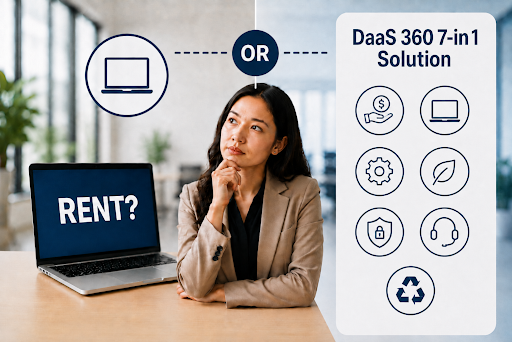
DaaS 360 positions Device-as-a-Service as a comprehensive, AI-driven technology solution rather than simply a hardware subscription. Its 7-in-1 model brings together Technology Financing, Hardware & Software Supply, Device Lifecycle Management, Carbon Neutral Computing, Security, IT Managed Services and Device Recovery.
Technology Financing provides organisations with a more flexible way to structure technology expenditure instead of depending entirely on large upfront purchases. Hardware & Software Supply ensures that the required technology can be aligned with workforce and operational requirements.
Device Lifecycle Management focuses on managing technology throughout its useful period, while Security helps organisations protect IT devices and business information as part of the wider IT environment.
IT Managed Services provide ongoing technology support and management, helping internal IT teams reduce the operational workload associated with maintaining workplace IT devices.
Device Recovery addresses what happens when technology reaches the end of its intended use, ensuring that recovery forms part of the IT lifecycle rather than becoming an afterthought.
Carbon Neutral Computing adds an environmental dimension to the model, helping organisations consider sustainability alongside technology performance and cost.
Together, these seven areas create a more integrated approach to managing workplace technology.
Why Are Enterprises and Government Organisations Considering DaaS?
Large organisations rarely manage only a handful of IT devices. Technology may be distributed across departments, offices, remote employees and operational locations. As the environment grows, managing IT devices through separate procurement, support, security and recovery processes can create additional complexity. DaaS can help simplify this by giving organisations a clearer framework for managing technology throughout its lifecycle.
A subscription-based approach can also provide greater predictability when planning technology expenditure. Instead of treating every IT device requirement as a separate capital purchase, organisations can align technology access more closely with workforce and operational needs. Another consideration is internal IT capacity. IT departments today are responsible for cybersecurity, infrastructure, applications, cloud services, digital transformation and emerging technologies such as AI. Routine device administration can consume resources that could otherwise support higher-value initiatives. By combining technology with IT managed services, DaaS can help streamline these responsibilities while maintaining visibility across the device environment.
How Can DaaS Support Digital Transformation?
Digital transformation depends on more than introducing new software or replacing old IT hardware. Employees need reliable technology, organisations need consistent security, and IT teams need enough visibility to identify and address issues before they disrupt operations.

An integrated DaaS model can support this by connecting IT devices with lifecycle management, security and IT managed services.
For example, proactive technology management can help identify potential device issues before they develop into larger disruptions. Remote IT services can support users across different locations, while structured lifecycle planning helps organisations determine when technology should be refreshed or recovered.
For enterprises and government organisations operating at scale, reducing unnecessary downtime and simplifying IT administration can contribute directly to productivity and business continuity.
How Does Sustainability Fit into Device-as-a-Service?
Technology lifecycle decisions increasingly need to consider environmental impact as well as cost and performance. Replacing IT devices without a structured recovery process can contribute to unnecessary electronic waste, while keeping inefficient technology in service for too long may create other operational challenges. By including IT device recovery and Carbon Neutral Computing within the wider model, DaaS 360 connects sustainability with technology lifecycle planning. This allows organisations to consider how technology is acquired, used and eventually recovered as part of the same strategy. For organisations with Environmental, Social and Governance (ESG) commitments, this can help align workplace technology decisions with wider sustainability objectives.
Is DaaS Right for Your Organisation?
DaaS becomes particularly relevant when technology management starts creating operational complexity. An enterprise with employees across multiple locations may need better visibility and remote IT management. A government organisation may require a more structured approach to technology lifecycle planning, security and recovery. A growing organisation may also need to expand its IT device environment without repeatedly restarting the procurement process.
The key question is not simply whether an organisation needs new laptops. It is whether the organisation needs a more efficient way to finance, deploy, secure, manage and recover technology throughout its lifecycle. Before choosing a DaaS solution, organisations should review their IT device requirements, software needs, security standards, service coverage, lifecycle expectations and end-of-use processes. The value of the solution should be assessed across the complete technology lifecycle rather than on IT hardware cost alone.
Frequently Asked Questions
Is Device-as-a-Service only a way to finance laptops?
No. Financing can form part of DaaS, but a comprehensive model can also include hardware and software supply, lifecycle management, security, IT managed services, sustainability services and device recovery.
Is DaaS suitable for enterprises and government organisations?
Yes. DaaS can be particularly relevant to larger organisations because they often manage more complex technology environments across multiple users, departments and locations. The appropriate solution will depend on the organisation’s technology, security and operational requirements.
Can DaaS help reduce IT workload?
It can. By incorporating areas such as device lifecycle management and IT-managed services, organisations can reduce some of the routine operational work associated with workplace technology and allow internal IT teams to focus on broader strategic priorities.
Does DaaS support cybersecurity?
Security can form part of a comprehensive DaaS environment. The exact security technologies and services will depend on the selected solution, so organisations should confirm their security requirements and coverage before implementation.
What happens to devices at the end of their lifecycle?
A structured DaaS model can include IT device recovery as part of the lifecycle. This provides organisations with a clearer process for managing technology when it is no longer required, including considerations around security and responsible IT asset recovery.
Simplify Technology Management with DaaS 360
Modern organisations need more than access to laptops and desktops. They need a technology environment that can support performance, security, scalability, sustainability and business continuity.
DaaS 360 brings these requirements together through its AI-driven 7-in-1 Device-as-a-Service model, combining Technology Financing, Hardware & Software Supply, Device Lifecycle Management, Carbon Neutral Computing, Security, IT Managed Services and Device Recovery.
The result is a more integrated way for enterprises and government organisations to manage technology across its lifecycle while reducing complexity and supporting cost-effective digital transformation.
Explore DaaS 360 and speak with our team about a Device-as-a-Service solution designed around your organisation’s technology and operational requirements.
Tech Simplified. Business Optimised.