Buying laptops has traditionally been the default approach when a business needs to equip its employees.
The process appears simple: choose the devices, approve the budget, purchase them and add them to the company’s assets.
For a growing SME, however, the purchase price is only the first decision.
The business must also consider how quickly its workforce may grow, when devices will need replacing, who will support them, how much capital should remain available for other priorities and what happens to ageing equipment.
This is why some Malaysian SMEs are reconsidering whether every workplace laptop needs to be purchased outright.
Laptop leasing provides another way to access business technology by spreading the cost across an agreed period rather than making the full investment at the beginning.
What Is Laptop Leasing?
Laptop leasing is an arrangement in which a business uses laptops for an agreed period while making scheduled payments instead of purchasing the devices outright at the beginning.
The exact structure depends on the provider and agreement.
Some leasing arrangements focus mainly on financing the equipment, while broader technology solutions may also incorporate software, deployment, technical support, device management or end-of-use services.
DaaS 360’s Tech Financing approach includes leasing alongside other technology financing and subscription options, allowing organisations to structure technology expenditure according to their business requirements.
The important difference is that the organisation no longer needs to treat every new laptop requirement as a full upfront purchase.
How Does Laptop Leasing Work?
The process begins with understanding what the workforce actually needs.
A business first determines how many devices are required and which specifications are appropriate for each type of employee. This is important because leasing an unnecessarily powerful device can create avoidable cost, while choosing an underpowered device can affect productivity.
The next decision is the leasing period.
The agreement needs to reflect how long the organisation expects to use the technology and when it anticipates its next refresh. DaaS 360’s technology financing options currently include short- and longer-term subscription structures, with longer contracts designed around typical hardware refresh periods.
Once the arrangement is agreed, devices are supplied and payments are made according to the contract rather than through one large initial purchase.
At the end of the agreed term, the next step depends on the arrangement. The business may move to newer technology, return the devices or consider another option specified in the agreement.
This creates an opportunity to plan technology refreshes rather than waiting until devices become unreliable before deciding what to do next.

Why Are SMEs Reconsidering Traditional Laptop Ownership?
The shift is not simply about avoiding the cost of buying laptops.
For growing businesses, the larger issue is flexibility.
A company with 30 employees today may have 50 employees next year. Another business may expand into a new location, introduce a new department or hire employees for a major contract.
When every device is purchased outright, each change requires another capital decision.
Leasing can make technology expenditure easier to align with workforce requirements because the organisation can plan devices around an agreed financing structure instead of repeatedly making individual purchases.
This can be particularly relevant to SMEs, where available capital may also be needed for recruitment, marketing, inventory, new premises or other growth priorities.
Leasing Can Make Technology Refreshes More Predictable
One common problem with outright ownership is that devices are often replaced reactively.
A laptop may remain in use until its battery degrades, its performance becomes inadequate or a hardware problem begins affecting the employee.
When this happens across a larger workforce, an organisation can end up with devices of very different ages and specifications.
Leasing encourages businesses to think about the refresh cycle earlier.
Instead of asking whether an individual laptop still works, the organisation can consider whether its technology remains appropriate for the employee’s workload, current software and wider business requirements.
This creates a more structured approach to maintaining the technology environment.
What Happens to Cash Flow When a Business Leases?
Buying several laptops at once requires a significant payment at the beginning.
Leasing changes the timing of that expenditure by spreading payments across an agreed period.
This does not automatically mean that leasing is always cheaper than purchasing. The total financial outcome depends on the contract, device specifications, duration, services included and what happens at the end of the agreement.
The advantage is primarily one of financial structure and predictability.
DaaS 360 describes its technology financing approach as a way to combine hardware, software and managed services within predictable payment models designed to support business cash flow.
For SMEs, this can make technology expenditure easier to forecast alongside other operational costs.

Does Leasing Reduce the Workload for IT Teams?
It can, depending on what the agreement includes.
A basic equipment lease may simply provide the financing structure, leaving the organisation responsible for deployment, management and technical support.
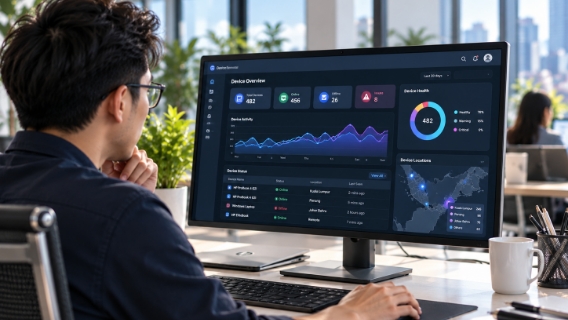
A broader Device-as-a-Service arrangement can go further by connecting financing with lifecycle management, monitoring, security, support and recovery.
This distinction matters because the real cost of workplace technology is not limited to the amount paid for the laptop.
Internal time spent configuring devices, handling faults, coordinating replacements and managing ageing equipment also forms part of the operational burden.
Businesses should therefore evaluate the services surrounding the lease, not only the monthly payment.
Leasing vs Buying: Which Is Better for an SME?
Neither model is automatically better.
Buying may make sense when the organisation has sufficient capital, expects to use the devices for a long period and is comfortable managing the complete lifecycle internally.
Ownership may also be suitable when the business has highly specialised equipment requirements or prefers to retain assets beyond a typical refresh period.
Leasing becomes more attractive when flexibility, cash-flow planning and regular technology refreshes are more important.
A growing organisation may also prefer leasing when its device requirements change frequently or when it wants technology expenditure to align more closely with workforce size.
The decision should therefore be based on how the organisation operates rather than on the assumption that ownership is always more economical.
What Should Businesses Check Before Signing a Laptop Lease?
The first area to review is the total scope of the agreement.
Businesses should understand the device specification, monthly payment, agreement duration and what happens when the term ends.
They should also clarify whether support, repair, replacement, software, security or device management are included.
Another important consideration is flexibility.
If the workforce expands or contracts, can the organisation change the number of devices? If an employee’s requirements change, can a different specification be introduced? If a device fails, what is the replacement process?
These operational questions can have more impact on the employee experience than the monthly price alone.
Businesses should also understand the end-of-term process so that device return, recovery or refresh does not become an unexpected administrative problem.
How Does Laptop Leasing Fit into a Wider DaaS Strategy?
Laptop leasing addresses one important part of the technology requirement: how the organisation finances access to devices.
DaaS addresses a wider question.
A comprehensive Device-as-a-Service model can connect financing with hardware and software, lifecycle management, security, IT managed services, sustainability and device recovery.
An organisation may therefore begin by reconsidering how it finances laptops and eventually decide that the larger opportunity is to improve the way technology is managed across its complete lifecycle.
For growing businesses, this distinction is important.
The objective should not simply be to replace one payment method with another. It should be to determine whether the organisation’s current technology model supports the way the business expects to grow.
Frequently Asked Questions
Is laptop leasing the same as laptop rental?
The terms are sometimes used broadly, but arrangements can differ. Leasing is commonly associated with a longer financing period, while rental can also accommodate shorter or more temporary requirements. Businesses should review the actual contract rather than relying only on the terminology.
Is leasing always cheaper than buying laptops?
No. Total cost depends on the device, duration, financing structure and services included. Leasing is often considered for its cash-flow predictability, flexibility and refresh planning rather than because it is automatically the lowest-cost option.
Can SMEs lease laptops for new employees?
Yes. Leasing can be useful when an organisation is expanding and wants to align device requirements with workforce growth instead of making repeated upfront purchases.
What happens when the leasing period ends?
The outcome depends on the agreement. Devices may be returned, refreshed or managed according to the provider’s end-of-term conditions. This should be confirmed before signing.
Can software and IT support be included?
They can be included in broader technology financing or Device-as-a-Service arrangements. Businesses should confirm exactly what is bundled into the selected solution.
Build a More Flexible Technology Strategy
Moving away from outright laptop ownership does not mean that purchasing is wrong.
It means businesses now have more ways to structure workplace technology around their actual operational requirements.
For growing SMEs, laptop leasing can provide greater predictability, a clearer refresh cycle and more flexibility when workforce requirements change.
For organisations that require broader support, DaaS 360 extends beyond financing through an integrated model that connects devices with lifecycle management, security, IT managed services, sustainability and recovery.
Explore DaaS 360’s technology financing solutions and speak with our team about an approach that fits your organisation’s workforce, budget and technology lifecycle.
Tech Simplified. Business Optimised.